
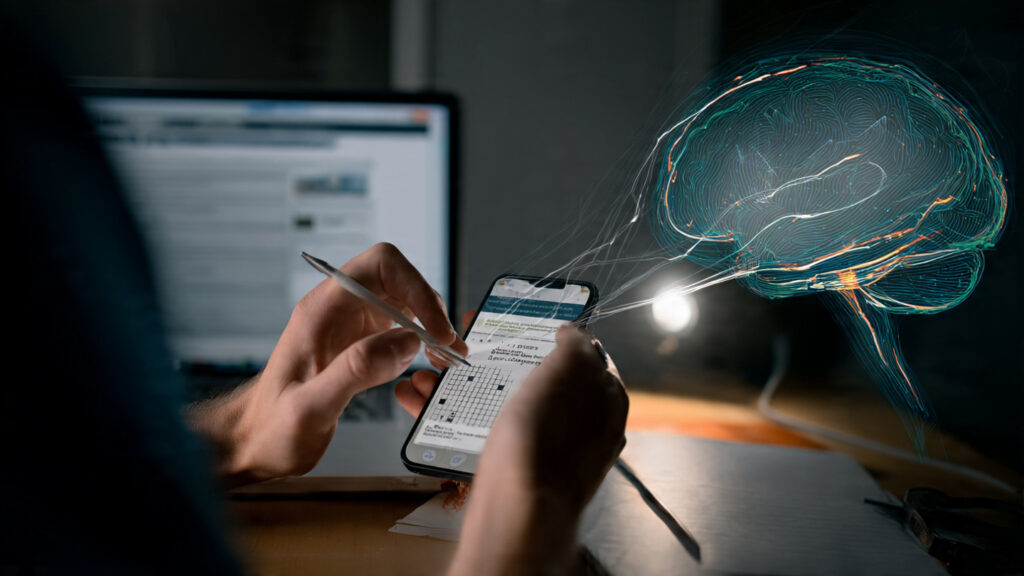
Discover the unexpected cognitive and community benefits of solving the NYT Mini Crossword daily. Boost your brain, sharpen vocabulary, and connect with a global puzzle ritual. Dive in!
NYT Mini: 7 Mind-Sharpening Benefits for Daily Play
In our hyper-connected, information-saturated world, finding moments of focused calm or quick intellectual stimulation can feel like a rare luxury. Yet, millions of people worldwide have found just that in a deceptively simple 7×7 grid: The New York Times Mini Crossword. What started as a bite-sized brain teaser has evolved into a daily ritual for many, transcending mere entertainment to become a significant part of their cognitive regimen and even a subtle social connector. But beyond the satisfying “solved” chime, what profound impact does this daily puzzle really have on our minds and lives? Is it just a fleeting distraction, or is there a deeper cognitive workout happening?
While the immediate gratification of finding today’s answers for November 22nd is undeniable, the true magic of the NYT Mini Crossword lies in its consistent, cumulative effect. This isn’t just about filling in boxes; it’s about engaging a powerful, flexible mental muscle. Let’s peel back the layers and uncover the unexpected cognitive and communal advantages that make the NYT Mini a daily must-do for so many.
The Daily Ritual Unpacked: Why the Mini Resonates So Deeply
The ubiquity of the NYT Mini is no accident. Its success is rooted in a perfect storm of accessibility, challenge, and psychological reward. In a world craving instant gratification and achievable goals, the Mini delivers a “micro-victory” within minutes.
Why the Mini Resonates
- Instant Gratification: A quick solve offers a dopamine hit, making it highly addictive in a positive way.
- Low Barrier to Entry: Its small size makes it less intimidating than a full-sized crossword, drawing in casual solvers.
- Consistent Challenge: While “mini,” it still requires lateral thinking, vocabulary recall, and pattern recognition.
- Digital Integration: Seamlessly available on mobile, it fits perfectly into commutes, coffee breaks, or waiting times.
This perfect blend turns what could be a simple time-filler into a cherished daily practice, a tiny anchor in the day’s ceaseless flow. But the real benefits extend far beyond just feeling good about a quick solve.
Beyond Simple Entertainment: Unexpected Cognitive Gains
Neuroscience research consistently points to the benefits of “brain games” and puzzles for maintaining cognitive health. The NYT Mini Crossword, despite its compact nature, taps into several key areas of brain function.
1. Sharpened Vocabulary and Semantic Recall
Every clue is a miniature linguistic challenge. Solvers constantly retrieve words from their mental lexicon, connecting definitions to specific letter patterns. This active recall strengthens neural pathways associated with language processing.
- Active Learning: Encountering new words or familiar words in new contexts expands vocabulary naturally.
- Word Association: The cross-referencing nature of crosswords forces the brain to make rapid connections between seemingly disparate concepts.
2. Enhanced Problem-Solving Skills
Each puzzle is a complex system of interconnected constraints. Solvers must employ deductive reasoning, pattern recognition, and strategic thinking to navigate the grid.
Example Strategy: If a 3-letter word for “Small insect” intersects with a 4-letter word for “Past tense of eat,” and you’ve got a ‘T’ in the middle, your brain quickly sifts through possibilities like “ANT” and “ATE.” This iterative process is a powerful mental workout.
3. Improved Focus and Concentration
In an age of constant notifications, dedicating a few minutes to a single task like the Mini Crossword can be a powerful antidote to digital fragmentation. It trains the brain to block out distractions and maintain attention on a specific goal.
4. Boosted Working Memory
Keeping multiple clues, potential answers, and intersecting letters in mind simultaneously is a direct exercise for working memory — the system responsible for temporarily holding and manipulating information. Studies show that regular engagement with such tasks can improve working memory capacity.
5. Stress Reduction and Mindfulness
The focused nature of puzzle-solving can act as a meditative practice. It shifts attention away from daily anxieties, providing a brief, calming mental break. The sense of accomplishment upon completion also contributes to a positive mood.
6. Adaptability and Cognitive Flexibility
Sometimes the initial interpretation of a clue is incorrect. Solvers must be able to pivot, reconsider, and adapt their approach, which builds cognitive flexibility — the ability to switch between different mental tasks or sets of rules.
7. A Shared Digital Experience: Community and Connection
While often a solo activity, the NYT Mini has fostered a vibrant online community. Sharing solve times, discussing tricky clues, or comparing strategies on social media transforms a personal challenge into a collective experience.
| Aspect | Impact on Solvers |
|---|---|
| Time Challenge | Motivates quick thinking, fosters a sense of competitive fun. |
| Clue Diversity | Keeps content fresh, introduces new knowledge domains. |
| Social Sharing | Builds community, offers a low-stakes way to connect digitally. |
| Sense of Achievement | Regular dopamine hits, positive reinforcement for mental effort. |
This communal aspect highlights how even a small digital puzzle can forge connections in unexpected ways, making the solitary act of solving a puzzle part of a larger, shared digital culture.
The Future of Digital Puzzles and Cognitive Well-being
As technology continues to evolve, so too will the ways we engage our brains. The NYT Mini Crossword stands as a testament to the power of well-designed, accessible digital tools to offer genuine cognitive benefits. It demonstrates that not all screen time is created equal; indeed, some can be profoundly enriching.
So, the next time you dive into the NYT Mini Crossword — whether it’s for today’s answers on November 22nd or any other day — remember that you’re doing more than just passing the time. You’re engaging in a powerful, proven ritual that hones your mind, boosts your vocabulary, sharpens your problem-solving skills, and connects you, however subtly, to a vast community of fellow intellectual adventurers. It’s a small grid with enormous benefits, proving that sometimes, the best brain workout comes in the smallest package.