
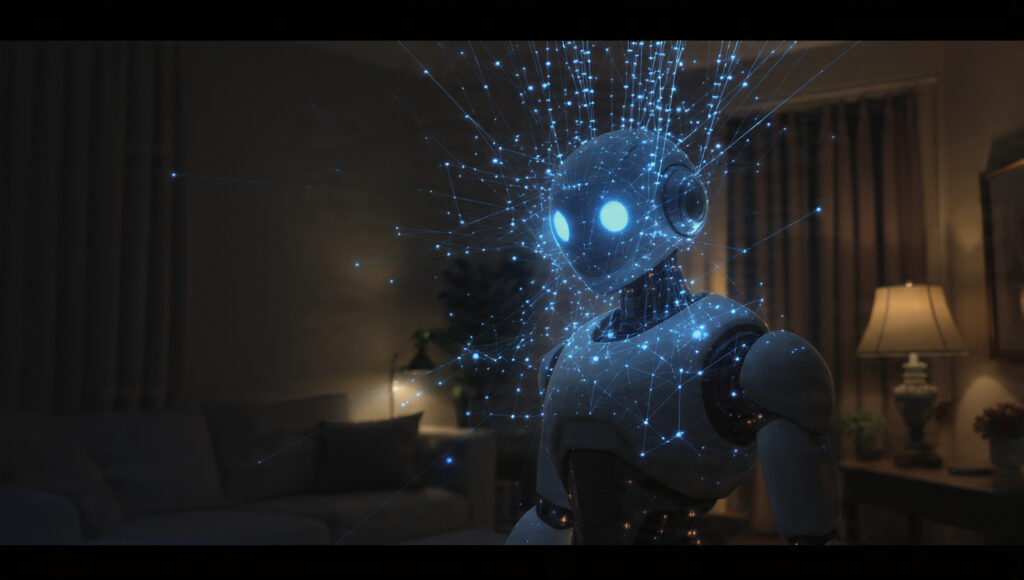
Thinking of a $20K home robot? Discover the hidden truth about human assistance behind the curtain. Learn about trust, privacy, and true autonomy before you invest. Make an informed decision.
Home Robots: $20K? Unveiling The Human-Assisted Autonomy
Imagine the future: a sleek, sophisticated robot glides through your home, effortlessly handling chores, managing schedules, and generally making your life easier. This vision is often sold with a hefty price tag—think upwards of $20,000 for a cutting-edge domestic bot. The promise is complete autonomy, a silent partner performing tasks with seamless intelligence. But what if there’s a secret lurking behind the polished exterior? What if, despite the impressive demonstrations, your ‘autonomous’ helper relies on a little more human intervention than you might expect?
The truth is, many of these aspirational home robots, designed to vacuum, tidy, or even fetch, currently operate with significant ‘human-in-the-loop’ support. This isn’t just a minor debugging process; it’s an integral part of their functionality, with remote operators stepping in to guide, troubleshoot, and even perform tasks that the AI isn’t yet capable of. This ‘Wizard of Oz’ approach raises crucial questions about the nature of autonomy, the value proposition of a $20K device, and the very definition of artificial intelligence in our homes. Before you commit to such a significant investment, it’s vital to understand the ethical, privacy, and long-term viability implications of a model where humans are constantly pulling the strings.
The “Wizard of Oz” Robot: Unpacking the Human-in-the-Loop Model
The term “Wizard of Oz” in human-computer interaction refers to systems that appear fully autonomous but are actually controlled or augmented by unseen human operators. In the realm of home robotics, this model is a pragmatic solution to current technological limitations.
What is “Human-in-the-Loop” Robotics?
Human-in-the-loop (HITL) robotics involves human intelligence actively participating in the decision-making or execution process of a robot. For home robots, this can manifest in several ways:
- Remote Piloting: An operator takes direct control when the robot encounters an unfamiliar obstacle or complex task.
- Task Verification: Humans review robot-generated plans or actions before execution to ensure safety and correctness.
- Data Labeling and Training: Operators continuously feed labeled data back into the AI system, helping it learn and improve over time. This is often the most significant ongoing human contribution.
- Exception Handling: When the robot’s AI hits a wall (e.g., a spilled liquid it’s not programmed to handle, a door it can’t open), a remote human intervenes.
This approach allows companies to deploy robots with capabilities that exceed their pure AI’s current prowess, offering a seemingly advanced experience while gathering critical real-world data for future autonomous development. The challenge lies in the transparency surrounding this assistance.
The Cost vs. Autonomy Paradox
A $20,000 price tag typically signals premium, cutting-edge technology. For consumers, this cost often implies advanced, self-sufficient autonomy. However, when a significant portion of the ‘intelligence’ is outsourced to human operators, a paradox emerges:
- Is the consumer paying for a robot, or for a robot-facilitated human service?
- How does the ongoing cost of human intervention (which the company bears) justify the initial capital outlay for the customer?
- What happens to the robot’s capabilities if the human support infrastructure is removed or scaled back?
This isn’t to say HITL is inherently bad; it’s a necessary stepping stone for complex AI development. The ethical quandary arises when the extent of this human involvement is obscured, leading to a potential misrepresentation of the product’s true capabilities and value.

Navigating the Ethical and Trust Labyrinth
The lack of transparency around human-assisted autonomy can severely erode user trust, a critical component for integrating technology into intimate spaces like our homes.
User Expectations vs. Reality
Consumers often form expectations based on marketing, sci-fi narratives, and the sheer cost of advanced tech. When a robot promoted as ‘autonomous’ falters without remote human help, or when users discover an unseen operator has been ‘fixing’ its mistakes, disappointment can turn into resentment. A survey by Accenture found that 76% of consumers want AI to be more transparent about how it works and collects data. This desire for transparency extends directly to understanding the robot’s true operational independence.
The Transparency Imperative
For home robotics to truly flourish, companies must embrace radical transparency. This means:
- Clearly communicating the level of human involvement.
- Explaining why human assistance is needed (e.g., for safety, learning, overcoming current AI limits).
- Detailing how this assistance will evolve as the robot’s AI matures.
Without this, the industry risks a significant backlash, akin to early AI chatbots that failed to disclose their human operators, leaving users feeling misled.
Privacy and Security in a Remotely Monitored Home
Perhaps the most pressing concern with human-in-the-loop home robots is the profound impact on privacy and security. A robot designed to operate within your personal space, when remotely monitored, essentially opens a window into your home.
Who’s Watching? Data Collection and Monitoring
Home robots are equipped with cameras, microphones, and other sensors to perceive their environment. When these feeds are accessible to remote human operators, several questions arise:
- What data is being collected? Is it just sensor data, or live video and audio feeds?
- Who has access to this data? Is it a dedicated team, third-party contractors, or potentially unauthorized individuals?
- How is the data secured? What measures prevent breaches or misuse?
- How long is the data retained? For what purpose?
Imagine a scenario where an operator observes sensitive personal moments or inadvertently captures confidential information. The potential for privacy violations is immense, demanding stringent data governance and ethical guidelines.
The Risk of Human Error or Malice
While often highly trained, human operators are not infallible. They can make mistakes, or in worst-case scenarios, misuse their access. A malicious actor gaining access to the remote control system could transform a helpful robot into a privacy nightmare or even a security threat. Companies must invest heavily in:
- Robust security protocols for remote access.
- Rigorous background checks and ongoing training for operators.
- Strict audit trails and accountability mechanisms.
The industry needs to learn from incidents in other sectors where remote human oversight led to privacy controversies, such as with certain ride-sharing or delivery services.
The Future of Home Robotics: Truly Autonomous or Always Assisted?
The current state of human-assisted autonomy is a stepping stone, but what does the destination look like?
Bridging the Gap: The Path to True Autonomy
Full autonomy in complex, unpredictable home environments remains a significant challenge. However, advancements in several areas are pushing the boundaries:
- Machine Learning & AI: Deeper neural networks, reinforcement learning, and federated learning are enabling robots to learn more efficiently from vast datasets and real-time interactions.
- Sensor Fusion: Combining data from multiple sensors (Lidar, cameras, ultrasound, tactile sensors) provides a richer, more reliable understanding of the environment.
- Edge AI: Processing data on the device itself reduces reliance on cloud connectivity and enhances real-time decision-making and privacy.
Despite progress, the “long tail” of unforeseen situations in a dynamic home environment means that truly general-purpose autonomous home robots are still years, if not decades, away.
Key Questions to Ask About Any Home Robot:
- What is the exact level of human intervention? Is it for learning, exception handling, or direct control?
- What data does the robot collect (video, audio, mapping)? How is it stored, secured, and for how long?
- Who has access to the data and video feeds? What are their credentials and oversight?
- What are the company’s data privacy and security policies? Are they GDPR, CCPA compliant, or adhere to similar robust standards?
- How will the robot’s autonomy evolve over time? Will software updates genuinely reduce reliance on human operators?
- What is the long-term support model? Does the price include ongoing human assistance, and for how long?
Conclusion
The promise of a truly autonomous home robot is alluring, and the journey to achieve it is filled with fascinating technological advancements. However, the current reality for many high-priced domestic bots involves a significant, often undisclosed, human element behind the scenes. This ‘Wizard of Oz’ model presents both opportunities for rapid development and profound challenges regarding user trust, ethical transparency, and stringent privacy protection.
As discerning consumers, our role isn’t to dismiss innovation but to demand honesty. By understanding the true nature of human-assisted autonomy and asking the right questions, we can ensure that our investments in the future of home robotics are not only technologically advanced but also ethically sound and respectful of our privacy. The future of home robotics isn’t just about what robots can do, but how transparent and trustworthy their evolution will be.