
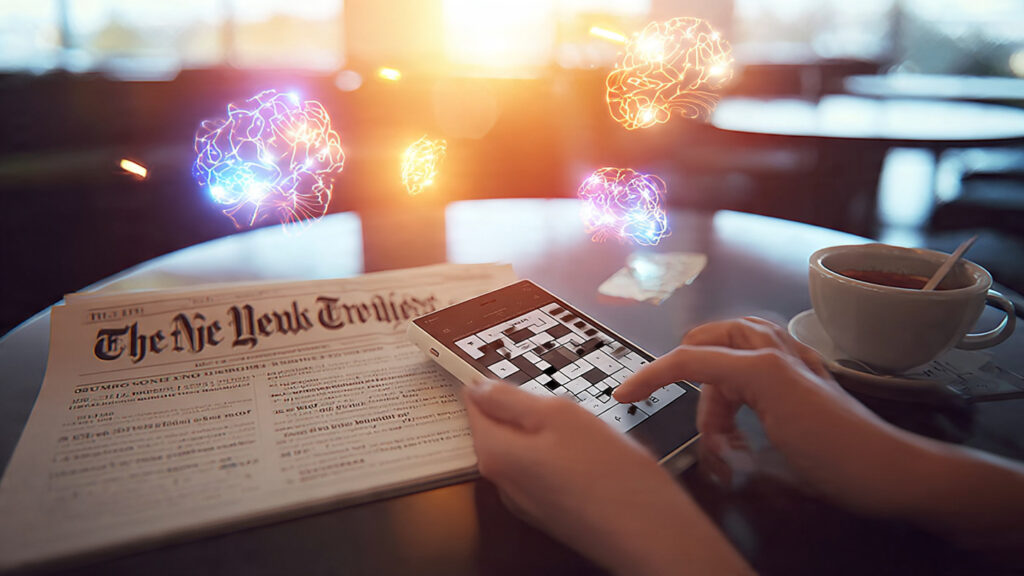
Master the NYT Mini Crossword with 5 expert strategies. Sharpen your mind, boost brainpower, and conquer daily puzzles efficiently.
Crack the NYT Mini: 5 Brain-Boosting Strategies
The New York Times Mini Crossword has become a beloved daily ritual for millions, offering a quick, satisfying burst of mental stimulation. While many articles simply provide the answers for a specific date, like today’s November 26th puzzle, our aim here is to transcend the immediate solution. We’re diving deeper into the ‘why’ and ‘how’ of conquering this delightful daily challenge, focusing on actionable strategies that not only help you solve it faster but also significantly boost your cognitive health. Forget looking up the answers; let’s unlock your inner wordsmith!
Why the NYT Mini Crossword Captivates Us
In a world of constant digital distraction, the NYT Mini Crossword stands out as a focused, achievable mental workout. Its compact size (typically 5×5) makes it less intimidating than its larger Sunday counterpart, perfect for a coffee break or a short commute. Yet, its clever cluing packs a punch, often requiring a blend of vocabulary, general knowledge, and lateral thinking.
The Daily Brain Teaser
For many, completing the Mini is a small victory that kickstarts the day. It’s a low-stakes challenge that provides instant gratification, and the consistency of a new puzzle every day fosters a healthy habit of mental engagement. It’s a personal benchmark, a quiet competition against yourself to improve speed and accuracy.
More Than Just a Time-Killer
Beyond simple entertainment, the Mini serves a vital role in keeping our brains agile. It’s an accessible form of neurobic exercise, engaging different parts of the brain in a dynamic way. This isn’t just about knowing words; it’s about connecting ideas, recognizing patterns, and problem-solving under gentle pressure.
The Cognitive Perks of Daily Crosswords
Engaging with puzzles like the NYT Mini isn’t just fun; it’s genuinely good for your brain. Research consistently points to the benefits of regular cognitive exercise in maintaining mental sharpness and potentially delaying cognitive decline.
Sharpening Your Lexicon
Crosswords are a fantastic way to expand your vocabulary and reinforce existing word knowledge. Each clue, whether direct or cryptic, challenges you to recall or infer words, making your mental dictionary more robust and accessible. Regularly encountering new words or old words in new contexts keeps your language centers active.
Enhancing Problem-Solving Skills
Every empty square represents a mini-problem to solve. You’re constantly analyzing clues, testing hypotheses, and adapting your approach. This iterative process strengthens your analytical thinking and decision-making capabilities, skills that are highly transferable to real-world challenges.
Boosting Memory and Focus
Solving crosswords requires both short-term recall (remembering rules, previous answers) and long-term memory (general knowledge, vocabulary). It also demands sustained attention, training your brain to block out distractions and concentrate on the task at hand. This improved focus can spill over into other areas of your daily life.

5 Pro Strategies to Master the NYT Mini
Ready to level up your Mini game? Here are five actionable strategies to help you conquer the grid without peeking at the answers:
1. Start with the Obvious: Short Words & Known Facts
Always begin by scanning for the shortest words (2-3 letters) and clues that relate to common knowledge, proper nouns, or frequently used abbreviations. These are often the easiest entry points and provide crucial letters for intersecting words. Think common prepositions, acronyms like ‘FBI’ or ‘URL’, or famous names.
2. Leverage Intersecting Clues
This is where the magic happens. Don’t stare blankly at a tough clue. Instead, look at the letters you’ve already filled in from other words. Even a single letter can dramatically narrow down the possibilities for an intersecting word. Work back and forth, using what you know to unlock what you don’t.
3. Think Broadly About Wordplay
The NYT Mini loves wordplay. Clues might use synonyms, homophones (words that sound alike), puns, or abbreviations. If a clue is vague, consider multiple meanings of words. For example, ‘A type of tree’ could be ‘OAK,’ but if the clue leads to a four-letter word, maybe it’s ‘PALM.’ Be flexible in your interpretation and expect clever twists.
4. The Power of Elimination and Pattern Recognition
When you’re stuck, think about what a word *can’t* be. If a three-letter word starts with ‘A’ and ends with ‘T’, you can rule out a lot of options. Also, recognize common crossword patterns and suffixes. Many plural words end in ‘S,’ and past tense verbs often end in ‘ED.’ These small insights add up.
5. Embrace the “Aha!” Moment: Step Away (Briefly)
Sometimes, the best strategy is to take a quick break. Step away from the puzzle for a minute or two, let your mind clear, and then return with fresh eyes. This often allows your subconscious to connect dots you missed, leading to that satisfying ‘Aha!’ moment where the answer suddenly becomes clear. It’s a scientifically proven method for problem-solving.
Beyond the Solve: Making it a Habit
The key to truly mastering the NYT Mini and reaping its cognitive benefits is consistency. Make it a daily habit. Don’t be discouraged if you can’t solve it every day without help initially. With practice, you’ll start to recognize common clue types, improve your vocabulary, and develop your own efficient solving rhythm. Track your times, celebrate your successes, and view each puzzle as an opportunity for mental growth.
Conclusion
While looking up today’s NYT Mini Crossword answers for November 26th might offer immediate relief, the real reward comes from the journey of solving it yourself. By applying these five brain-boosting strategies, you’re not just completing a puzzle; you’re actively sharpening your mind, enhancing your problem-solving abilities, and building a stronger, more agile brain. So, next time you open the NYT Mini, take a deep breath, embrace the challenge, and enjoy the satisfaction of cracking the code on your own terms. Your brain will thank you for it!