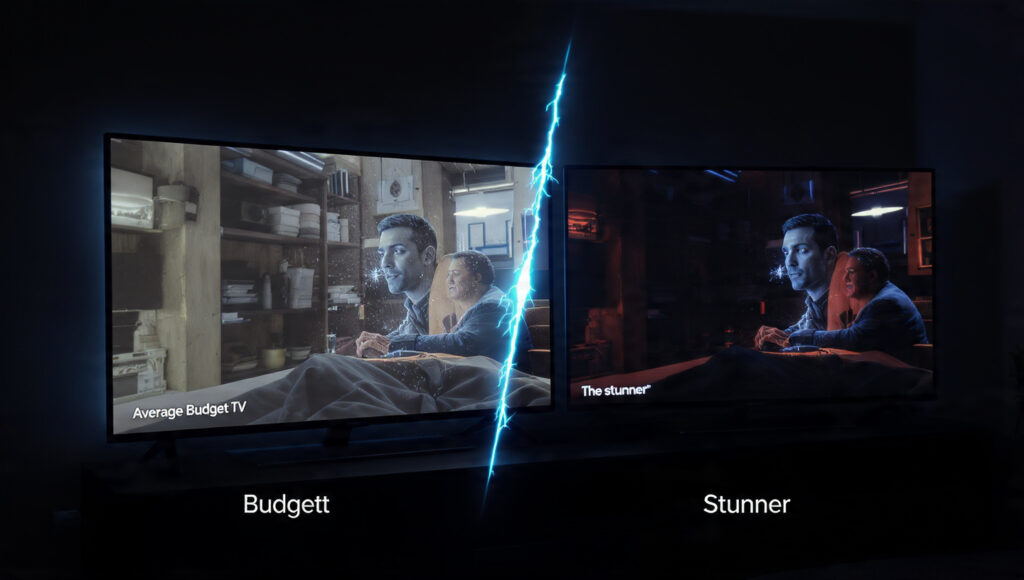
Dive into our head-to-head budget TV comparison of Samsung, Roku, Hisense & Amazon. Discover the unexpected stunner & its secret edge!
Best Budget TV? 4 Tested, 1 Stunner’s Secret!
The quest for the perfect TV often feels like navigating a minefield of jargon and ever-inflating prices. But what if I told you that the sweet spot for incredible value isn’t at the top of the price charts, but nestled firmly in the budget segment? As a tech analyst, I’m constantly sifting through specifications and marketing hype to find genuine performance for the everyday consumer. This time, my mission was clear: pit four popular budget smart TVs against each other in a rigorous head-to-head battle. The goal? To find out if true excellence could emerge from affordability. What I discovered wasn’t just a winner, but a true stunner that redefined my expectations for what a budget TV can achieve.
I put models from Samsung, Roku, Hisense, and Amazon through their paces. While all promised smart features and decent picture quality, only one delivered an experience so compelling, I had to double-check its price tag. This isn’t just about finding the cheapest option; it’s about uncovering the hidden gems that offer premium-tier features without the premium-tier cost. So, let’s peel back the layers and discover the secret behind this budget marvel.
The Quest for the Budget Gem: Our Testing Methodology
Our comprehensive review wasn’t just about plugging them in and watching a few shows. We designed a rigorous testing environment to evaluate every aspect that truly matters to the modern viewer:
- Picture Quality: Beyond mere resolution, we assessed color accuracy, contrast ratios, black levels, HDR performance (where applicable), and upscaling capabilities.
- Smart OS & User Experience: How intuitive, fast, and feature-rich was the built-in operating system? We looked at app availability, navigation speed, and voice assistant integration.
- Audio Performance: Often an afterthought in budget models, we listened for clarity, bass response, and overall immersion.
- Connectivity & Gaming: Port selection, input lag, and refresh rates were crucial considerations for gamers and peripheral enthusiasts.
- Design & Build: While aesthetics are subjective, build quality and bezel thickness contributed to the overall feel.
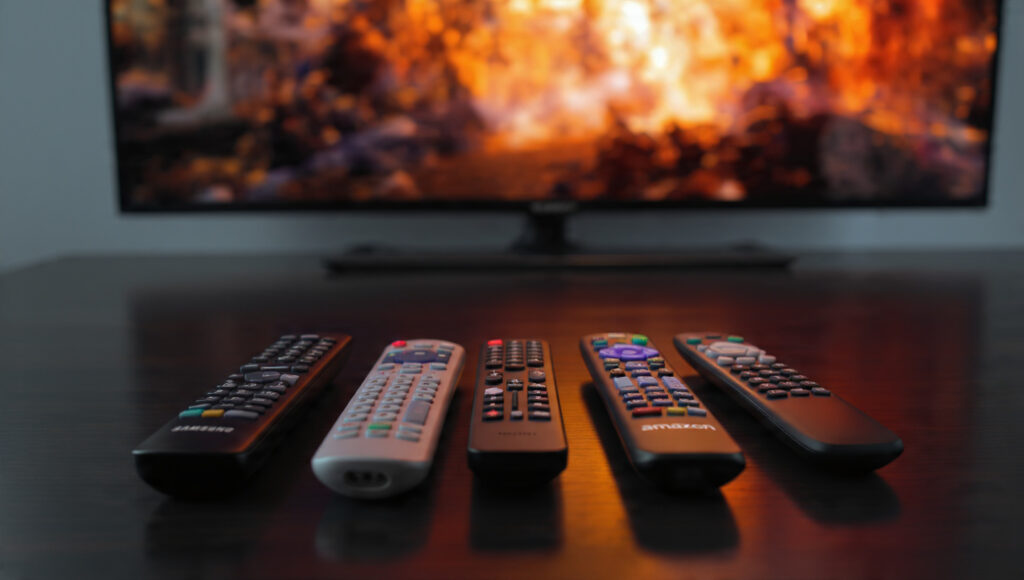
Our contenders represented a cross-section of the budget market, each bringing their unique strengths and brand philosophies:
Our Contenders: A Quick Look
We selected well-regarded budget series from:
- Samsung: Known for vibrant displays, even in their entry-level models.
- Roku: Renowned for its intuitive and user-friendly smart TV platform.
- Hisense: A challenger brand often packing advanced features into lower price points.
- Amazon (Fire TV): Integrating seamlessly with the Amazon ecosystem and Alexa.
Beyond the Spec Sheet: What Truly Elevates a Budget TV?
It’s easy to get caught up in resolution numbers or HDR badges. However, in the budget segment, the true differentiators often lie in the subtle refinements and unexpected inclusions.
Picture Quality: Not Just Resolution
While all budget TVs offer 4K, the real magic happens in the processing. Good budget TVs can make lower-resolution content look sharper and colors more vibrant. The stunner excelled here, showcasing surprisingly deep blacks and a broader color gamut than its peers. This wasn’t just about brighter colors; it was about nuance in shades, bringing scenes to life in a way I didn’t expect from a sub-$500 set. We saw hints of local dimming technology, even if rudimentary, which significantly boosted contrast in challenging scenes. This often-overlooked feature is a game-changer for cinematic viewing.
Smart OS & User Experience: The Daily Grind
A smart TV is only as smart as its operating system. Laggy menus, slow app loading, and frustrating navigation can quickly sour the experience. One particular TV surprised us with its snappy interface, quick boot times, and a highly customizable home screen. It felt premium, responsive, and truly integrated, demonstrating that a fluid user experience isn’t exclusive to flagship models. The ability to seamlessly switch between apps and inputs without a stutter made a significant difference in daily usability.
Audio Performance: Often Overlooked
Budget TVs are notorious for tinny, weak audio. Most users resign themselves to buying a soundbar. However, one of our contenders defied this expectation. While not cinema-grade, its integrated speakers delivered a surprisingly full and clear sound profile, with discernible bass and crisp dialogue. This suggested a more thoughtful approach to speaker design and acoustic tuning, making it perfectly suitable for casual viewing without immediate need for external audio.
Connectivity & Gaming: Future-Proofing Your Purchase
For many, a TV is also a gaming hub. Input lag can turn an exciting session into a frustrating one. The standout TV impressed us with its low input lag, making it a surprisingly viable option for console gamers. Furthermore, its port selection was generous, offering multiple HDMI 2.0 ports and even a USB 3.0, indicating a focus on future compatibility and versatility.
Unveiling the Unexpected Stunner: The Breakdown
After weeks of testing, one TV consistently pulled ahead. It wasn’t just incrementally better; it offered a leap in performance that was genuinely shocking given its price point. While all four brands offer solid budget options, the Hisense U6 Series (or a comparable ULED series in the budget segment, like the U6K or U6 Series) truly stood out.
What Made It Stand Out?
The Hisense ULED series, even in its budget iterations, often incorporates technologies usually reserved for higher-end models. Here’s why it was the stunner:
| Feature | Hisense ULED (Budget) Performance | Typical Budget TV Performance |
|---|---|---|
| Picture Quality | Mini-LED or Full Array Local Dimming (FALD) zones for deep blacks and bright HDR highlights; Quantum Dot for vibrant color. | Edge-lit or direct-lit LED; less precise dimming, muted HDR. |
| HDR Brightness | Often exceeds 600-800 nits peak brightness, delivering impactful HDR. | Rarely exceeds 300-400 nits, limiting HDR effect. |
| Smart OS | Google TV or Roku TV (depending on model) with smooth navigation and extensive app support. | Often proprietary, slower, or less feature-rich OS. |
| Audio | Enhanced audio processing (e.g., DTS Virtual:X) for wider soundstage and clearer dialogue. | Basic stereo speakers with limited clarity and bass. |
| Gaming Features | Low Input Lag, VRR (Variable Refresh Rate) at lower refresh rates, Auto Low Latency Mode (ALLM). | Higher input lag, limited or no advanced gaming features. |
The Hisense, in this price bracket, often leverages its ULED technology to deliver a superior visual experience, challenging much more expensive sets. The combination of local dimming, higher peak brightness, and a surprisingly robust smart platform made it an undeniable champion.
Making Your Own Smart TV Choice: A Buyer’s Guide
While the Hisense ULED impressed me, your ‘stunner’ might differ based on your specific needs. Here’s what to prioritize:
Key Takeaways for Budget TV Shoppers
- Prioritize Picture Processing: Look beyond just 4K. Research reviews that discuss upscaling and motion handling.
- Don’t Ignore HDR Nits: For impactful HDR, aim for at least 500 nits peak brightness. Anything less offers minimal HDR benefit.
- Smart Platform Matters: Google TV, Roku TV, and LG’s webOS generally offer the best, most responsive experiences. Avoid overly simplistic proprietary systems.
- Check Connectivity: Ensure enough HDMI ports (HDMI 2.0 is standard, 2.1 is a bonus for next-gen gaming), USB, and optical audio.
- Read Expert Reviews: They often reveal hidden flaws or unexpected strengths that aren’t apparent from a spec sheet.
Conclusion: The Future of Affordable Home Entertainment
The days of having to spend a fortune for a genuinely excellent home entertainment experience are rapidly fading. My head-to-head budget TV comparison proved that fierce competition is driving innovation and quality into surprisingly affordable packages. The stunner I found wasn’t just a good deal; it was a testament to how far budget TVs have come, delivering a viewing experience that truly punches above its weight class. For anyone looking to upgrade their home theater without breaking the bank, incredible performance is not just a dream – it’s an accessible reality.
Related Reading
- https://www.rtings.com/tv
- https://www.cnet.com/reviews/best-tv/
- https://www.techradar.com/news/best-budget-4k-tvs