Generative AI Unleashed: Mastering the Transformative Power of Intelligent Creation
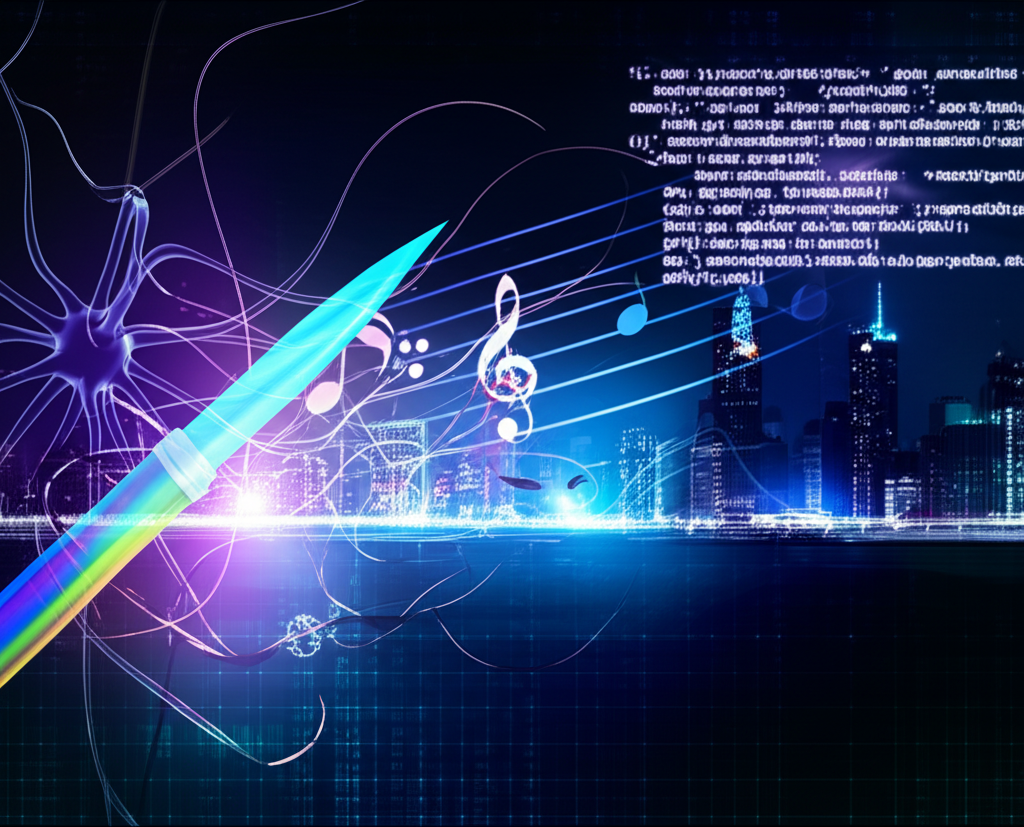
In the vast and ever-accelerating landscape of technological innovation, few advancements have captured the collective imagination and sparked as much debate as Generative Artificial Intelligence. Far from being a mere incremental upgrade, Generative AI represents a seismic shift, fundamentally altering how we create, innovate, and interact with digital information. From crafting intricate visual art and composing melodic symphonies to writing compelling code and designing complex molecular structures, these intelligent systems are not just processing data; they are generating entirely new, original content. This profound capability is ushering in an era where the boundaries of human creativity are being stretched, redefined, and augmented by machine intelligence.
The journey of AI has been marked by milestones, from expert systems and machine learning to deep learning. However, Generative AI stands out by moving beyond analysis and prediction to actual creation. It’s a field powered by sophisticated models like Generative Adversarial Networks (GANs), Variational Autoencoders (VAEs), and perhaps most notably, large transformer models such as those underpinning ChatGPT and Stable Diffusion. These models learn patterns, structures, and styles from vast datasets, enabling them to produce outputs that are often indistinguishable from human-made creations. The implication? Every industry, every creative field, and nearly every aspect of our digital lives is poised for a radical transformation.
What Exactly is Generative AI? A Deeper Dive
At its core, Generative AI refers to algorithms that can generate new content, ideas, or solutions. Unlike discriminative AI, which classifies or predicts based on input data (e.g., identifying spam emails), generative models learn the underlying distribution of the training data. This means they understand “how” the data is formed, allowing them to produce novel examples that share the characteristics of the original dataset.
- Generative Adversarial Networks (GANs): Introduced by Ian Goodfellow and colleagues in 2014, GANs consist of two neural networks, a ‘generator’ and a ‘discriminator’, locked in a continuous competition. The generator creates new data (e.g., images), while the discriminator tries to distinguish between real data and generated data. This adversarial process refines the generator’s ability to create increasingly realistic outputs.
- Variational Autoencoders (VAEs): VAEs are neural networks capable of learning a compressed, meaningful representation of input data (the ‘latent space’) and then generating new data points from this latent space. They are particularly effective for tasks like image generation and reconstruction.
- Transformer Models: Revolutionizing natural language processing, transformer architectures, first introduced by Google in 2017, enable models to process sequences of data (like words in a sentence) in parallel, understanding context and relationships over long distances. Large Language Models (LLMs) like GPT (Generative Pre-trained Transformer) are built on this architecture, allowing them to generate coherent, contextually relevant human-like text at an unprecedented scale. Their success has quickly extended to other modalities, including image and video generation (e.g., DALL-E, Midjourney, Sora).
The synergy of massive datasets, advanced algorithms, and ever-increasing computational power has propelled Generative AI from a theoretical concept to a practical, impactful tool that is reshaping our digital landscape.
A New Era of Creation: Key Applications Across Industries
The versatility of Generative AI means its applications span virtually every sector, promising unprecedented efficiency, personalization, and innovation.
Content & Media Creation
Perhaps the most visible impact of Generative AI is in the creative industries. Text-to-image models have democratized visual art, allowing anyone to conjure intricate graphics, photorealistic scenes, or abstract compositions from simple text prompts. Services like Midjourney and Stable Diffusion have opened new avenues for designers, marketers, and artists. Similarly, LLMs are transforming writing, assisting with everything from drafting emails and marketing copy to generating entire articles, scripts, and even novels. The music industry is seeing AI compose original scores, generate background tracks, and even create personalized playlists. Video generation tools are also rapidly advancing, promising to accelerate filmmaking and content production.
Software Development & Engineering
Generative AI is proving to be a powerful co-pilot for developers. Tools like GitHub Copilot (powered by OpenAI’s Codex) can suggest lines of code, complete functions, and even generate entire blocks of code based on natural language descriptions, significantly boosting productivity. Beyond code generation, AI is assisting in debugging, refactoring, and even designing new software architectures. In engineering, generative design algorithms can optimize product designs for specific performance criteria, creating lighter, stronger, or more efficient components faster than human designers ever could.
Science, Research & Healthcare
The scientific community is leveraging Generative AI for accelerated discovery. In drug development, AI can generate novel molecular structures with desired properties, drastically shortening the time and cost associated with finding new therapeutics. For instance, companies are using GANs to design new proteins or antibodies. In materials science, AI is designing novel materials with tailored characteristics. Healthcare benefits from AI’s ability to generate synthetic medical images for training AI models, create personalized treatment plans, and even simulate disease progression.
Education & Personalization
Generative AI is poised to revolutionize education by creating highly personalized learning experiences. It can generate tailored study materials, practice questions, and even provide real-time tutoring feedback. For businesses, AI enables hyper-personalization in marketing, customer service (with advanced chatbots), and product recommendations, leading to more engaging user experiences.
The Transformative Ripple: Economic & Societal Shifts
The widespread adoption of Generative AI is not without its broader implications, sparking both excitement and apprehension about the future of work, creativity, and societal structures.
Productivity Gains & New Roles
A recent report by Goldman Sachs suggested that Generative AI could automate 300 million full-time jobs globally. While this figure is alarming, history shows that technological revolutions often create as many, if not more, new jobs than they displace. The nature of work is shifting; rather than full displacement, we are likely to see significant job augmentation. Roles requiring repetitive tasks will be most affected, while jobs emphasizing critical thinking, creativity, complex problem-solving, and human-centric skills will be enhanced and become more valuable. The ‘prompt engineer,’ for example, is a new role emerging from the need to effectively communicate with generative models.
Democratization of Creativity & Innovation
Generative AI lowers the barrier to entry for many creative and technical fields. Individuals without formal training can now produce high-quality content, design products, or even write basic code. This democratization has the potential to unleash an explosion of creativity and innovation from previously underserved populations, fostering a more inclusive and diverse creative landscape. Small businesses and startups can leverage AI to compete with larger enterprises, creating marketing materials, product mock-ups, and even software prototypes with unprecedented speed and efficiency.
Navigating the Ethical Minefield
As with any powerful technology, Generative AI presents significant ethical challenges that demand careful consideration and proactive solutions.
Bias, Misinformation & Deepfakes
Generative models learn from the data they are trained on. If that data contains societal biases (e.g., gender, racial, cultural), the AI will perpetuate and even amplify those biases in its outputs. This can lead to unfair or discriminatory results in areas like hiring or loan applications. Furthermore, the ability to generate hyper-realistic fake images, audio, and video (deepfakes) poses serious threats to truth, trust, and national security, making it harder to discern reality from fabrication. The spread of misinformation and disinformation could be supercharged, threatening democratic processes and public discourse.
Copyright & Ownership
A major legal and ethical quandary revolves around copyright. Who owns the content generated by AI? If AI models are trained on copyrighted material, do their outputs constitute derivative works, and if so, who is liable? This issue affects artists, writers, and musicians whose work might be used without explicit consent or compensation to train these powerful models. The current legal frameworks are ill-equipped to handle these novel challenges, necessitating new legislation and industry standards.
Security Risks & Control
Generative AI could be misused for malicious purposes, such as creating sophisticated phishing scams, generating malware, or crafting propaganda campaigns that are virtually indistinguishable from legitimate content. Ensuring the safe and responsible development and deployment of these technologies is paramount. The concentration of power in a few large AI labs also raises concerns about control and accountability, necessitating transparent governance models and international cooperation.
Embracing the Future: Strategies for a Generative World
To harness the immense potential of Generative AI while mitigating its risks, a multi-faceted approach involving individuals, businesses, governments, and educational institutions is essential.
Upskilling, Reskilling & Education
The most crucial individual strategy is continuous learning. Workers must be empowered with the skills to collaborate with AI, understand its capabilities, and manage its outputs. Educational institutions need to integrate AI literacy into curricula, preparing future generations for an AI-augmented workforce. Governments should invest in robust reskilling programs to support those whose jobs are significantly impacted.
Ethical AI Development & Policy
Developers and researchers must prioritize ethical considerations from the outset, focusing on bias detection, transparency, and explainability. Governments must work collaboratively to establish clear regulatory frameworks that address issues like copyright, data privacy, accountability for AI-generated content, and the responsible use of deepfake technology. This will require a delicate balance between fostering innovation and safeguarding societal well-being.
Human-AI Collaboration: The New Frontier
The future of work is not human vs. AI, but human + AI. The most successful endeavors will involve leveraging AI for its strengths (speed, data processing, pattern recognition, generation) while valuing human strengths (creativity, empathy, critical judgment, strategic thinking, ethical reasoning). This collaborative synergy will unlock new levels of productivity and innovation.
Conclusion: A Defining Moment for Humanity
Generative AI is not merely a tool; it is a fundamental shift in our relationship with technology and creativity. Its ability to generate novel content is reshaping industries, sparking unprecedented innovation, and challenging our notions of originality and intellect. While the benefits are immense, the ethical dilemmas and societal transformations it heralds are equally profound. Navigating this new frontier successfully will require foresight, adaptability, robust ethical frameworks, and a commitment to ensuring that this powerful technology serves humanity’s best interests. The era of intelligent creation is here, and how we choose to wield its power will define the coming decades.